moraea

The Frontier of
Nutrition Tracking

Available on
the App Store
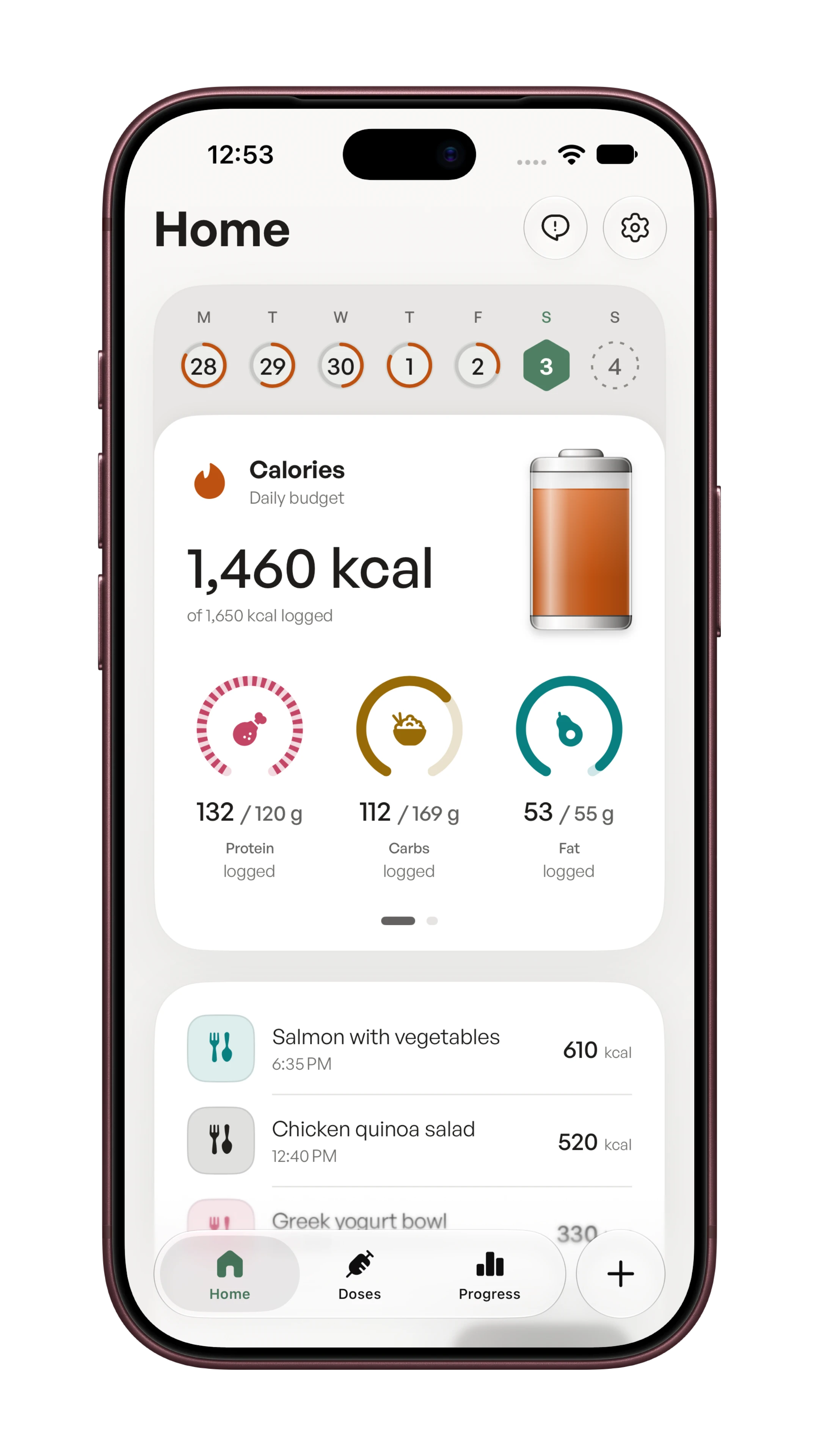
Moraea Home screen showing today's calorie budget and protein, carbs, and fat rings.

Other trackers make you search and weigh. Moraea just needs a photo or a sentence. Calories, protein, carbs, and fiber in seconds.

And it gets the numbers right. It reads portions and labels, checks brand and restaurant nutrition facts, and asks when it's unsure. Already tracking meals in 100+ countries.

Powered by the world's leading AI models

  • ChatGPT
  • Claude
  • Gemini

Everything a calorie tracker should do, and a few things none of them do.
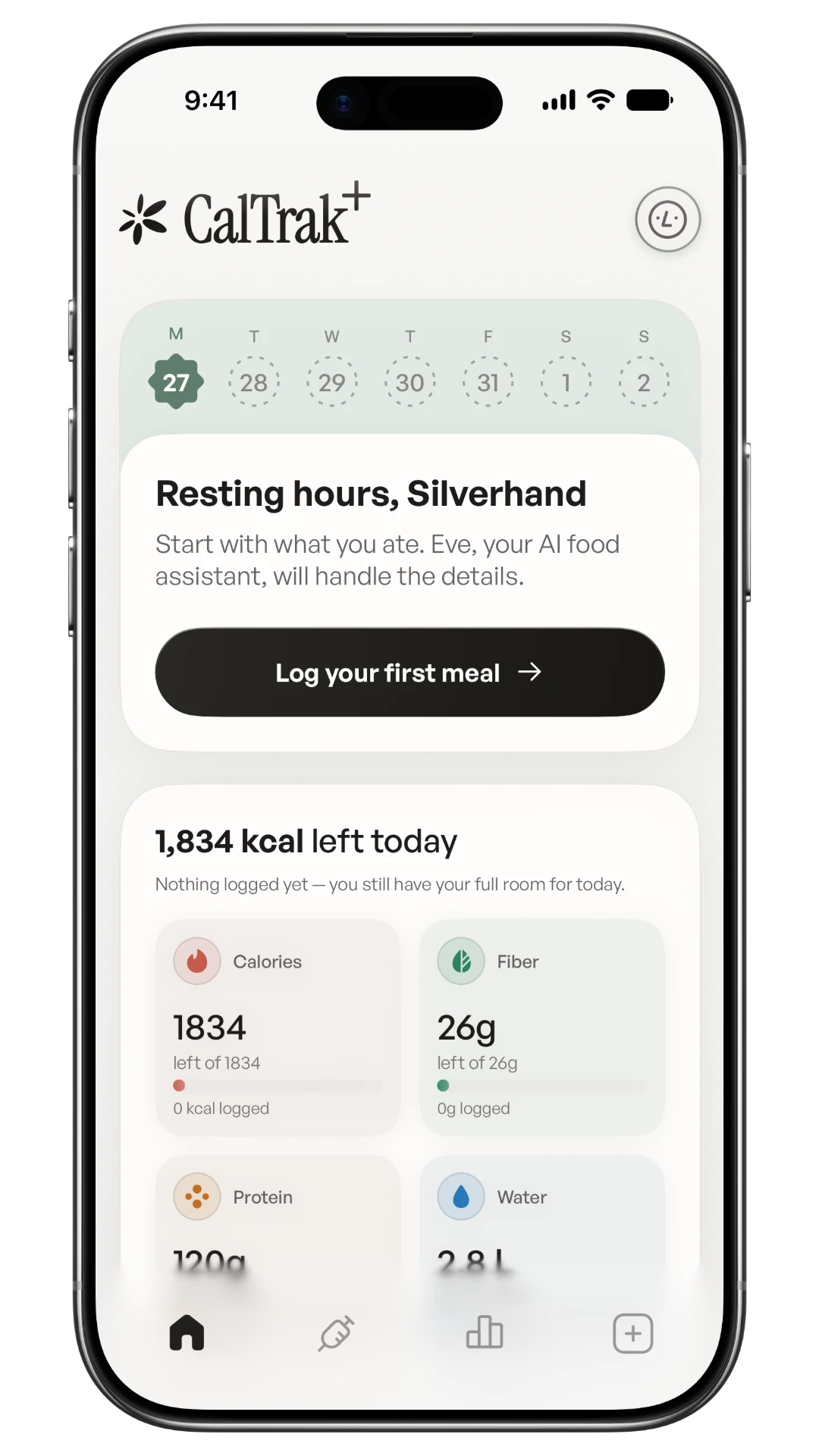
Hit your targetsGoals that adapt to the day you're actually having.
Moraea Home dashboard showing the day's calorie, protein, fiber, and hydration targets.
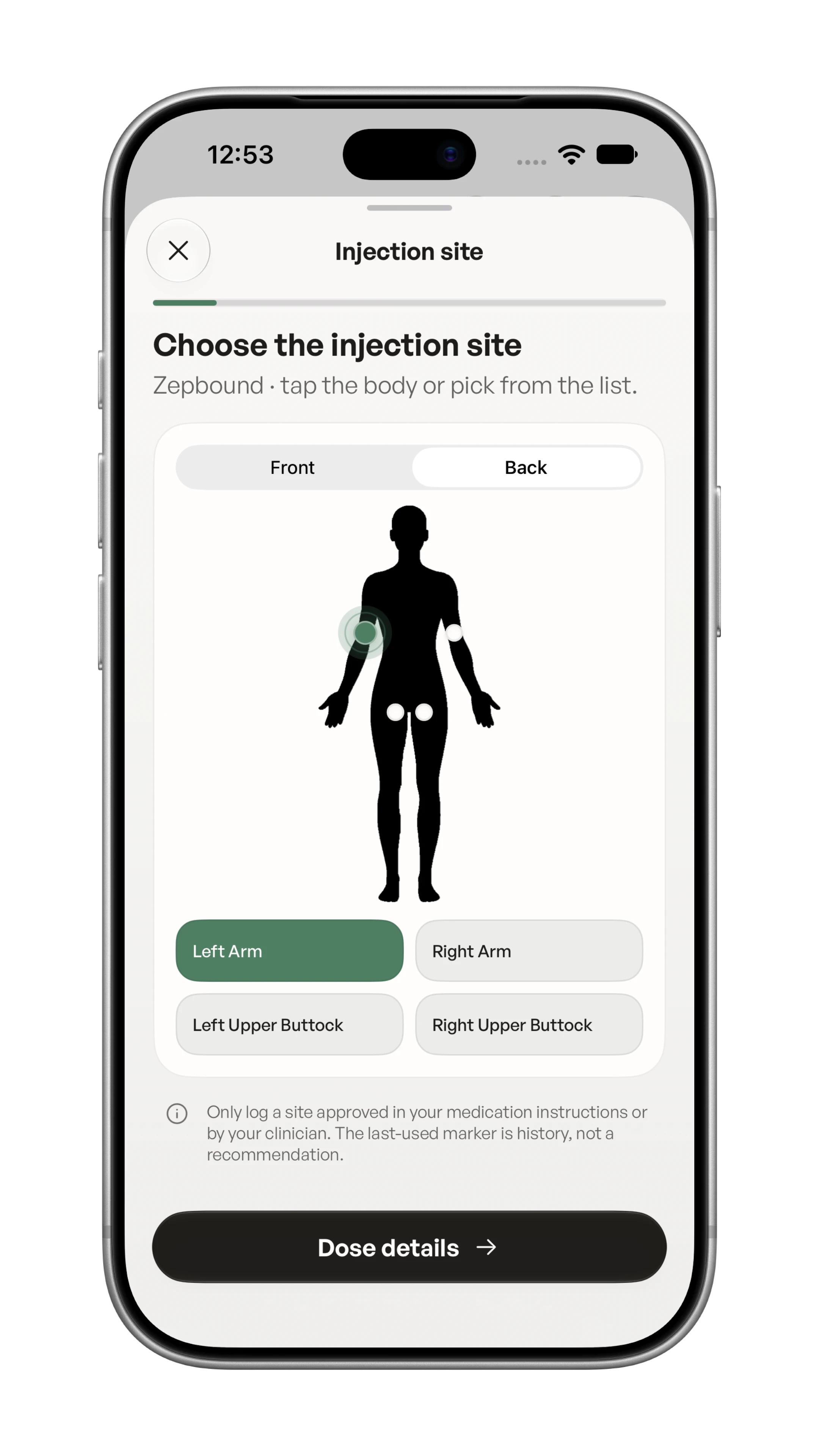
On a GLP-1? Covered.Dose days and side effects, logged with meals.
Moraea Log dose flow showing the injection-site body map with site rotation.
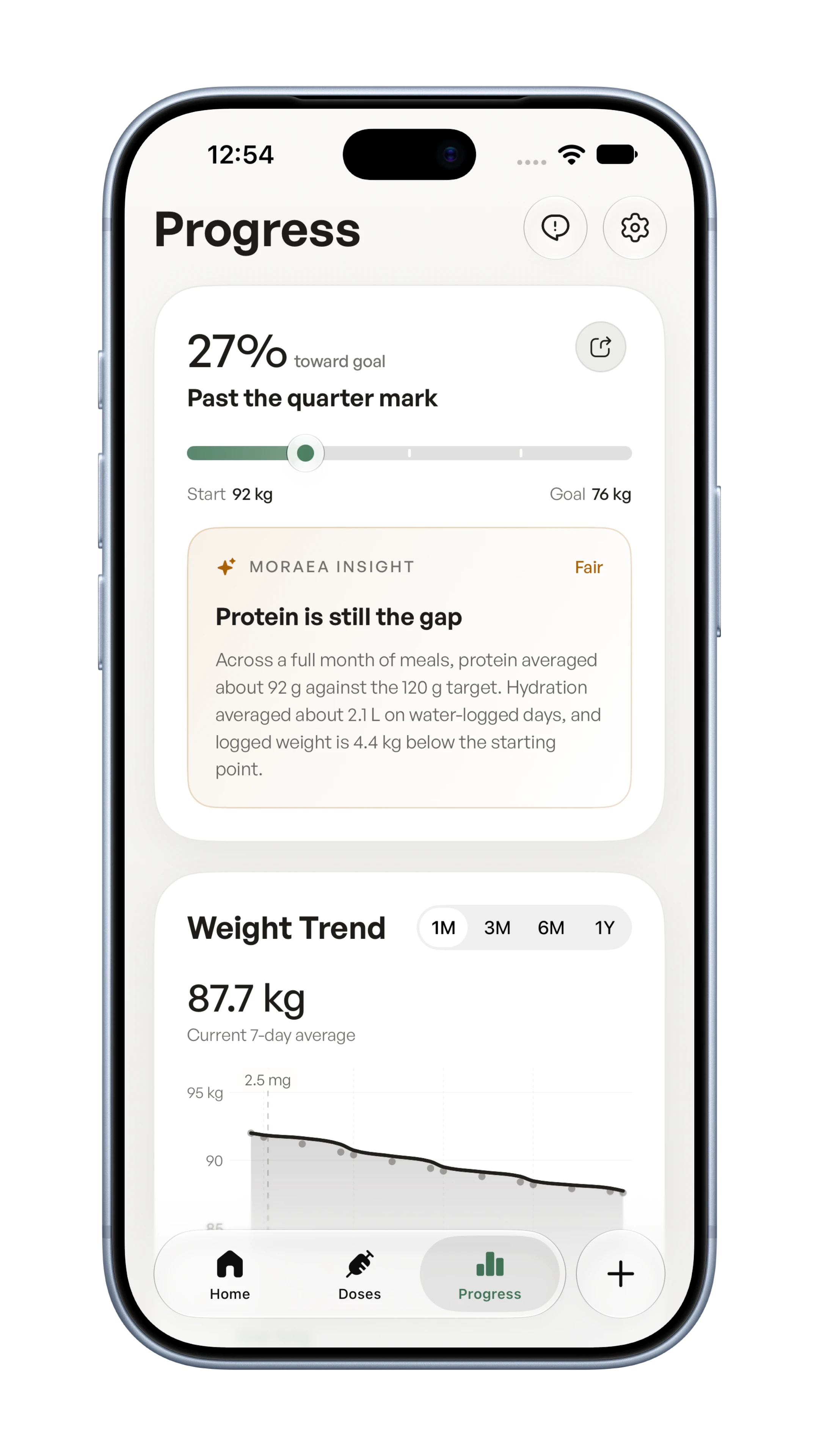
Walk in with proofMilestones, weigh-ins, and doctor-ready exports.
Moraea Progress screen showing milestones, weigh-ins, and an AI insight.

Fast enough to stick with.

Tracking only works if you keep doing it. Moraea makes logging quick, and what you log is what you keep.

10 sec

to log a meal with Moraea AI: a photo, a voice note, or plain words like “a large latte.”

40%

of the weight lost while dieting or on a GLP-1 can be lean muscle. Daily protein targets are how you keep yours.

2 in 3

pounds can come back within a year of stopping a GLP-1. The habits you build now are the ones that last.

Industry-leading AI. Answers in seconds.

Moraea AI runs on frontier vision and language models, among the most accurate in the industry and one of the fastest. A meal becomes calories, protein, carbs, and fiber before your fork is down, and every number stays yours to review and refine.

Snap it, say it, or scan it.

  • Snap itA photo of the plate is enough. Moraea AI picks out each food, the portion, and how it was cooked.

  • Say itType or speak it in plain words, like “had shrimp ramen for lunch” or “a large latte from Starbucks.”

  • Scan itPoint the camera at a barcode and packaged food is matched to its label in a second.

Smaller calorie errors.

Across 100 weighed meals, Moraea AI’s Max mode was off by 24.9% on average from a photo alone, and 22.5% with a list of the foods on the plate. In an NIH study, popular photo calorie apps missed about a third of each meal’s calories.

Average calorie error per mealLower is better
  • Moraea AI (Max)Photo + ingredient list

    22.5%
  • Moraea AI (Max)Photo only

    24.9%
  • AppedietPhoto only

    ≥26%
  • MyFitnessPalPhoto only

    ≥34%
  • Lose It!Photo only

    ≥34%
  • Cal AIPhoto only

    ≥36%

Bars start at 0% (full width = 40%). Moraea: 100 weighed meals from Google’s Nutrition5k dataset, tested by us, October 2026. The ingredient list named foods only, never amounts. Other apps: NIH study of 102 weighed meals (NUTRITION 2026); figures are our lower-bound estimates from the calories each app missed. Different meals in each test.

How we tested

What the chart shows

Each bar is the average calorie error per meal: how far an estimate landed from the meal’s measured calories, in either direction, as a share of those calories. Lower is better. The bars start at 0%, and a full-width bar would be a 40% error.

Moraea’s bars come from our own test of Moraea AI in Max mode, run in October 2026. The other four bars come from a study by researchers at the US National Institutes of Health (NIH). The two tests used different meals, so this is a side-by-side of results, not a head-to-head on the same plates.

The meals

We used Nutrition5k, a public dataset from Google Research of real cafeteria plates. Every ingredient on each plate was weighed, and the plate’s calories were calculated from those weights.

From the plates the dataset sets aside for testing, we kept those with at least 150 calories and at least three ingredients, so each one looks like a meal rather than a side. We shuffled them with a fixed random seed before running anything and took the first 100 with an overhead photo. None of these plates were used while we tuned Moraea AI, and no meal was added or removed after we saw a result.

How Moraea ran

Moraea AI has three modes: Fast, Balanced and Max. We tested Max. Each meal went through the same code that answers in the app in Max mode: the same instructions, the same web lookups and the same checks on the reply. The photo was resized and compressed the way the app does it. Clarifying questions were turned off, so Moraea had to give an estimate every time.

Every meal was run twice:

  • Photo only: just the picture, the same task the NIH researchers gave the other apps.
  • Photo + ingredient list: the picture plus a plain list of what is on the plate, such as “scrambled eggs, bagel, cream cheese, strawberries”. The list never gave amounts, so Moraea still judged portions from the photo.

Moraea’s results

There are two common ways to average the error: the average of each meal’s error, and the total error across all meals divided by their total calories. The chart uses whichever is higher.

  • Photo only: total error 24.9% (the chart’s figure); average per-meal error 22.8% (95% confidence interval 20–26%). 47 of 100 meals were within 20% of the measured calories.
  • Photo + ingredient list: total error 22.5% (the chart’s figure); average per-meal error 20.8% (95% confidence interval 18–24%). 55 of 100 meals were within 20%.
  • Moraea’s misses ran low more often than high: overall it under-counted by 16% from a photo and 14% with an ingredient list.

The other apps

Researchers at the NIH’s National Institute of Diabetes and Digestive and Kidney Diseases photographed 102 meals made in a metabolic kitchen, where every ingredient is weighed to a tenth of a gram, and ran the photos through MyFitnessPal, Lose It!, Cal AI and Appediet. Every app under-counted. Per meal, on average: Appediet by 252 calories, MyFitnessPal by 327, Lose It! by 333 and Cal AI by 345, about a third of each meal’s calories overall.

The study published how many calories each app missed per meal, and that together the apps missed about a third of each meal’s calories. It did not publish a percentage for each app or the meals’ average size. To chart each app, we assumed the meals averaged about 950 calories, the size at which the four apps’ average shortfall is a third, and divided each app’s shortfall by it. That gives estimated under-counts of 26% for Appediet, 34% for MyFitnessPal, 35% for Lose It! and 36% for Cal AI. An app’s average error is at least its average under-count, so the chart shows each figure as a lower bound, rounded down in the app’s favor: Appediet ≥26%, MyFitnessPal ≥34%, Lose It! ≥34% and Cal AI ≥36%. These are our estimates, not figures the study reported, and each app’s real error can only be higher.

The study was presented at NUTRITION 2026 in July 2026. A smaller 2024 study from the University of Sydney also found large errors on mixed dishes: across seven dishes, MyFitnessPal’s estimates were off by 68% on average, HealthifyMe’s by 49%, Foodvisor’s by 28% and Fastic’s by 19% (our calculation from the study’s tables).

Limits

  • Different meals. The Nutrition5k plates average about 410 calories; the NIH meals were full research-diet meals. Percentages compare across meal sizes better than calories do, but these are still different tests.
  • Per-app figures are estimates. They depend on the assumed meal size: if the study’s “about a third” was rounded, each app’s figure could move by a few points.
  • Reference values. Both tests calculate a meal’s calories from weighed ingredients and standard food tables, so the measured figures carry those tables’ own small errors.
  • Versions. The NIH study tested app versions available in 2026. Moraea’s figures are for Max mode as of October 2026. Fast mode was less accurate in the same test (about 31% error), and Balanced has not been tested yet.
  • We ran this test ourselves, and no one outside Moraea has checked it. Nutrition5k is public, so anyone can repeat it.

Sources

  1. NIDDK researchers (presented by Olivia Charles). Photo-based calorie-tracking apps may underestimate energy in meals. NUTRITION 2026 news release, July 25, 2026.
  2. Healio. AI photo-based calorie-tracking tools underestimate them by 33%. August 4, 2026 (per-app figures).
  3. Li X, et al. Evaluating the quality and comparative validity of manual food logging and artificial intelligence-enabled food image recognition in apps for nutrition care. Nutrients. 2024;16(15):2573.
  4. Thames Q, et al. Nutrition5k: Towards automatic nutritional understanding of generic food. CVPR 2021.
  5. Nutrition5k dataset, Google Research (CC BY 4.0).

Recipes that fit your numbers.

Ask Moraea what to cook. Every recipe is tailored to your dietary and nutritional needs, not a generic meal plan.

  • Sized to your targetsPortions fit the calories and protein you still have room for today, so dinner lands where it should.

  • Shaped by how you eatYour dietary preferences and restrictions guide every suggestion, from ingredients to swaps.

  • Cook it, then log itIngredients and method in one place, with macros per serving ready to log in a tap.

Private enough for real health data.

Health tracking is personal. Moraea keeps your logs on your iPhone, shares only what you choose, and never sells your data.

  • On your iPhone firstYour logs live on your device, not on someone else's servers.
  • Nothing leaves without a tapSharing and exports only ever happen because you chose them.
  • Not sold. Not ad-targeted.Your data is never sold and never used to target ads.
  • Never used to train AIMoraea AI helps you log. Your entries never train anyone's models.
  • Apple Health stays localHealth syncing happens on-device, under Apple's permissions.
  • You're in controlExport or delete everything you've logged, any time.

Questions, answered.

The short version of what Moraea does, how its AI food assistant works, and how your information is handled.

Still wondering something? Email us. We read every one.